
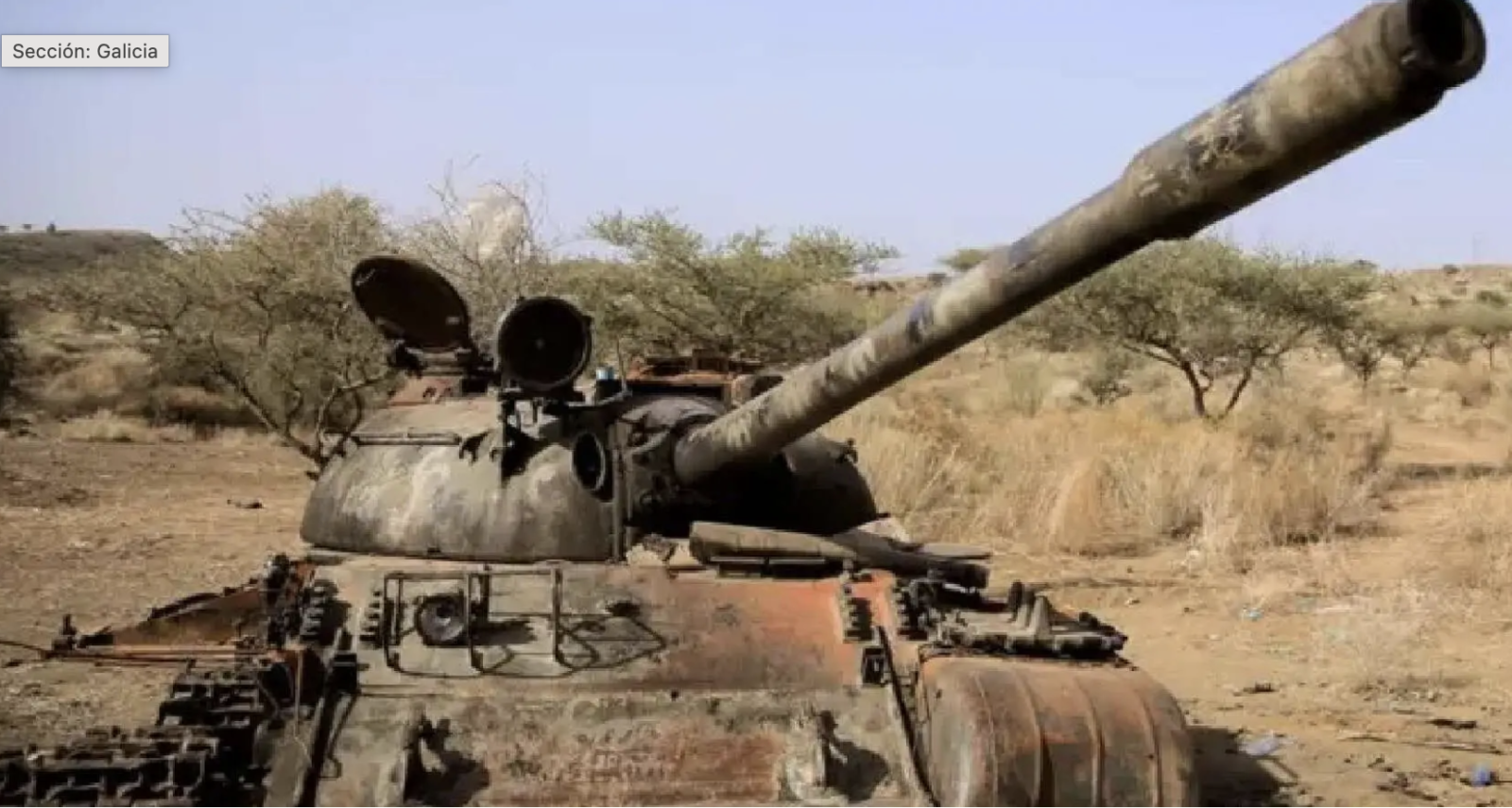
Eritrean Troop Movements in Tigray Raise Fears of Wider Ethiopia-Eritrea Conflict
Northern Ethiopia is once again edging toward a scenario many had hoped was firmly in the past. Reports of Eritrean troops in Tigray, particularly in Adigrat and along the corridor leading south, have introduced a potentially decisive element into a war that until now has largely been portrayed as a confrontation between Ethiopia’s federal government and an armed alliance involving the Tigray People’s Liberation Front (TPLF).
The significance of these movements goes beyond simply determining how many soldiers may have crossed the border. The key question is what their presence would mean: Eritrea could be moving from indirectly supporting certain actors to intervening militarily on Ethiopian territory, at a time when relations between the two countries have already broken down.
Reuters reported that two residents of Adigrat saw trucks carrying soldiers on Wednesday whom they identified as Eritrean based on their uniforms. Regional conflict expert Jalale Getachew Birru of ACLED also said Eritrean forces had crossed through Zelambessa and advanced toward Adigrat. Eritrea, however, denies that its troops are in Ethiopia and says the allegations are part of an Ethiopian strategy to justify a war.
The current crisis began after months of deteriorating relations between the government of Prime Minister Abiy Ahmed and the TPLF, the organization that dominated Tigray before the 2020-2022 war. Fighting resumed in late September and quickly spilled beyond the region’s political borders, reaching parts of Amhara and Afar as well.
The conflict also has a different dimension from the one seen four years ago. The TPLF is now part of an alliance of armed groups seeking to confront the federal government, while Addis Ababa has accused several neighboring countries of supporting the alliance. Eritrea, Sudan and Egypt have all been accused by the Ethiopian government of providing such support, but all three countries have rejected the allegations.
The military situation is also constantly changing. TPLF forces recently withdrew from Mekelle, the capital of Tigray, as federal forces regained positions. That move does not necessarily signal the end of the Tigrayan resistance. Instead, the conflict is shifting toward strategic corridors and rural areas, precisely where the intervention of outside actors could alter the balance of power.
From the Tigray War to a Conflict Between States
Adigrat, located about 25 kilometers from the Eritrean border, is no ordinary location. It lies along the axis connecting the border with Mekelle and serves as one of the main corridors into northern Tigray.
Witnesses cited by Reuters described trucks carrying dozens of soldiers moving south, while sources consulted by the BBC spoke of even larger convoys heading toward Edaga Hamus and other nearby towns. The British broadcaster, however, warned that it had been unable to independently verify the movements because of severe access restrictions in the area.
Conflict monitor ACLED has provided another potentially significant detail, reporting that Eritrean forces may have been targeted by Ethiopian drones after crossing the border through Zelambessa. While this information alone does not establish the scale of any potential Eritrean intervention, it highlights how sharply the risk of a direct confrontation has increased.
Although there is still no comprehensive and independent picture of the deployment, and the Eritrean government categorically denies it, the developments go beyond political accusations. Multiple consistent testimonies and analysis of military movements appear to point strongly in the same direction.
Behind the military crisis lies a much deeper strategic dispute. Ethiopia lost its access to the sea following Eritrea’s independence in 1993 and, since then, the country — despite being one of Africa’s most populous nations — has depended heavily on Djibouti to handle its foreign trade.
In recent years, Prime Minister Abiy Ahmed has repeatedly emphasized that securing its own maritime access is an economic and strategic priority for Addis Ababa. However, while the Ethiopian government says it is seeking a peaceful and negotiated solution, officials in Asmara broadly interpret such statements as a direct threat to Eritrea’s sovereignty and its Red Sea ports.
This issue helps explain why relations between the two countries have deteriorated again after their 2018 rapprochement. That reconciliation ended two decades of hostility and led to Prime Minister Abiy Ahmed receiving the Nobel Peace Prize.
However, the alliance was based largely on pragmatism. At the time, the two governments shared a common enemy: the Tigray People’s Liberation Front. During the subsequent Tigray War from 2020 to 2022, Eritrean troops fought alongside Ethiopian federal forces against Tigrayan fighters.
The 2020-2022 war left hundreds of thousands of people dead and caused enormous destruction, alongside serious allegations of abuses committed by various military forces. The result was a population deeply traumatized by the presence of both national and foreign troops.
For that reason, the latest movements of Eritrean troops carry implications beyond military strategy. For many residents of Tigray, seeing those uniforms return means reliving a traumatic experience that remains painfully fresh in their memories.
Until now, Ethiopia could portray the fighting primarily as an internal security problem. If Eritrean forces intervene directly, however, the situation changes dramatically. Asmara could become an active party to the conflict, and any Ethiopian attack on Eritrean troops could trigger a military response from a neighboring state.
The diplomatic rupture has already removed one of the main mechanisms for containing escalation. On October 1, Ethiopia closed its embassy in Asmara and expelled 10 Eritrean diplomats. Eritrea responded by severing diplomatic relations.
Risk of the Conflict Spreading Across the Region
The current concern extends beyond Ethiopia and Eritrea, as the Horn of Africa is already dealing with several simultaneous conflicts. To the west of Tigray lies Sudan, which has been engulfed in a devastating civil war for more than three years, while Eritrea lies to the north.
Further afield is Egypt, a country whose relationship with Addis Ababa remains particularly sensitive because of the longstanding dispute over the Grand Ethiopian Renaissance Dam and the resulting division of strategically important Nile waters.
Addis Ababa has accused Sudan and Egypt of supporting armed opposition groups, allegations both countries deny. The presence of several regional actors with competing interests increases the possibility that a conflict initially confined to one area could become linked to other disputes.
The United States has already warned of the potential consequences. Washington has urged Ethiopia and Eritrea to exercise restraint and warned that another war between the two countries would put its cooperation with both governments at risk.
The African Union has also called on the parties to avoid actions or statements that could further undermine regional stability.
Another factor makes the situation particularly sensitive: the Red Sea. Eritrea has roughly 1,000 kilometers of coastline and occupies an extremely strategic position along one of the world’s major maritime routes.
As a result, at a time when shipping through the Red Sea and the Bab el-Mandeb Strait is already facing significant international tensions, the outbreak of a war between Ethiopia and Eritrea could have serious consequences extending far beyond the local region.
Eritrea’s geographic position has become even more significant amid the current Middle East crisis. Reuters has reported that Asmara is seeking to regain international relevance by taking advantage of its strategic position along the Red Sea.
The most concerning historical precedent for the current crisis is the Ethiopia-Eritrea border war of 1998-2000, a conflict that claimed tens of thousands of lives. Although it was formally brought to an end through a peace agreement, it took nearly two decades for relations between the two countries to fully normalize.
While the reconciliation that took place in 2018 demonstrated that the two countries were capable of rebuilding their relationship, the current diplomatic rupture, by contrast, shows that the framework created by that rapprochement was far more fragile than it appeared.
The central question now is not simply whether Eritrean troops are present in Tigray, but what mission they would be carrying out if their presence is ultimately confirmed.